
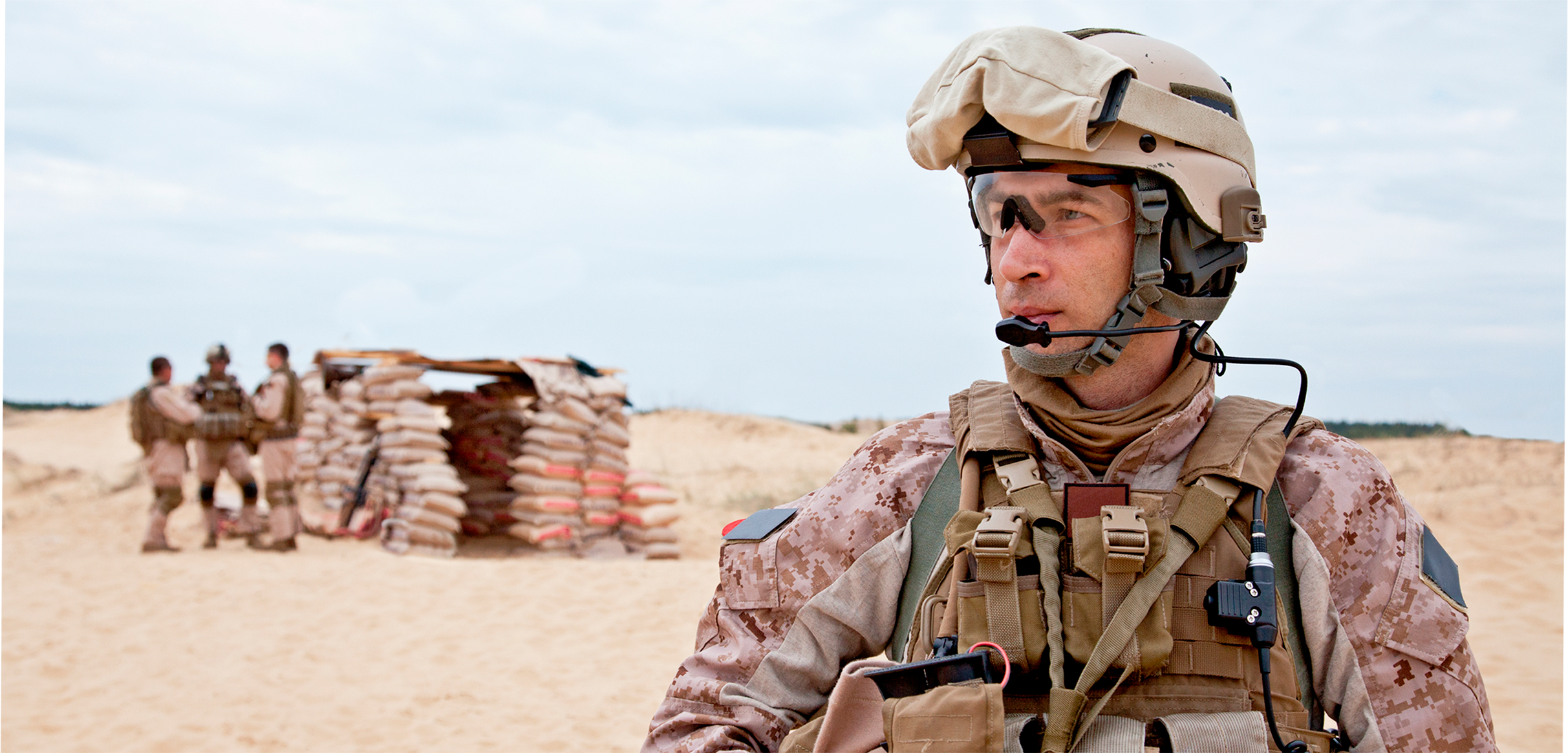
THE MODERN WARFIGHTER: A COGNITIVE ATHLETE
By Balraj Dhillon, B.Sc.
The nature of warfare has irrevocably shifted. Today’s battlespace is a complex, high-velocity environment defined not only by physical threats but by an overwhelming overload of information.
For the modern warfighter, cognitive dominance is as crucial as physical prowess. Further to that, the modern warfighter isn’t necessarily on the front-line, but rather in a war room or an operations center. The modern warfighter is a cognitive athlete, constantly navigating a storm of complex data streams where the speed and accuracy of their decision-making is the primary determinant of mission success and survival.
The central nervous system is the new frontline.
Yet, despite this reality, we are failing to equip our personnel with the tools to measure and monitor their most critical asset: their cognitive function. The ability to think, decide, and act faster and more effectively than the adversary is the ultimate strategic advantage. The critical question is no longer if we need to optimize the warfighter’s brain, but how we can achieve and sustain this cognitive edge.
The challenge is immense. Warfighters are constantly under pressure from cognitive load, stress, fatigue, and even sub-concussive impacts from blast exposure. These factors degrade the very neural processes that underpin their ability to make life-or-death decisions. This decision-making process is often described by the OODA loop: Observe, Orient, Decide, and Act. A compromised OODA loop can lead to catastrophic mission failure.
Historically, assessing a warfighter’s cognitive readiness has been a significant challenge. Traditional methods are often subjective, resource-intensive, and lack the precision needed for the operational environment. We’ve relied on self-report questionnaires and behavioral tests, which can be influenced by a myriad of factors and don’t always reflect the true state of a warfighter’s brain function. These methods provide a foggy, unreliable snapshot when what we desperately need is a high-resolution, real-time video feed of the brain’s processing power. There’s been a clear and pressing need for an objective, rapid, and deployable tool to measure cognitive function at the point of care.
This is where breakthrough technologies like NeuroCatch comes in. This platform is a game-changer in the field of cognitive evaluation. It provides a fast, portable, and objective neuro-physiological assessment of cognitive function. The platform isolates robust biomarkers for distinct cognitive functions, including auditory sensation, basic attention, and higher-order cognitive processing. This is not a vague wellness metric; it is a direct, quantitative measurement of the brain’s information processing capacity.
In just six minutes, NeuroCatch can deliver a detailed report on a person’s brain health by measuring event-related potentials (ERPs). ERPs are the brain’s electrical responses to specific sensory or cognitive events, measured with millisecond precision. They give us a direct window into the speed and efficiency of neural information processing. NeuroCatch focuses on three key ERPs forr distinct cognitive functions: Auditory Sensation (N100), Basic Attention (P300), and Cognitive Processing (N400). Unlike a standard EEG which measures the brain at rest, NeuroCatch measures the brain in action.
What strategically aligns the technology lies in its direct application to the OODA loop. The “Observe” phase, the initial registration of sensory data, is reflected in early ERP components like the N100. The “Orient” phase, where meaning is assigned and integrated, is captured by later components like the P300 and N400. Inefficiencies in these neural signatures, such as delayed responses or reduced amplitudes, can indicate a warfighter’s diminished capacity to orient themselves in dynamic situations. The “Decide” phase is a direct outcome of the efficiency of the preceding stages. Faster and more robust ERPs signify superior cognitive throughput, fueling a more agile decision-making process.
The strategic advantages of integrating NeuroCatch into military protocols are manifold:
- Real time cognitive readiness monitoring: We can track deviations in ERP signatures to get early, objective indicators of compromised OODA loop integrity due to operational stressors or neurological insults before it’s too late.
- Optimize human performance & training protocols: ERP data can be used to objectively monitor the effects of cognitive enhancement training programs on ERPs, helping to accelerate OODA loop processing and build cognitive resilience.
- Accelerate & validate return to duty: Following an injury, NeuroCatch provides data-driven metrics to inform return-to-duty decisions, ensuring that warfighters are restored to optimal cognitive function.
- Talent management & role specialization: By identifying individuals with innately superior neural processing characteristics, we can better select personnel for roles that demand peak rapid decision-making under extreme pressure.
This technology is already making a difference in the military space. In the greater Vancouver area, a new mental health center is using a combination of advanced technologies to measure and treat PTSD in soldiers and first responders, including using NeuroCatch to monitor ERP changes. This highlights the growing recognition of the need for objective tools to address the invisible wounds of service.
By delivering precise, quantitative measures of the neural substrates that underpin the OODA loop, NeuroCatch empowers service men and women to sharpen decision cycles, bolster cognitive resilience, and ultimately achieve and sustain cognitive dominance. In the modern battlespace, the ability to outthink, out maneuver, and out decide the adversary is paramount.
NeuroCatch is not just an innovative tool; it’s a strategic enabler that provides a direct means to measure and monitor the very foundations of the warfighter’s cognitive capabilities. The future of warfare is here, and it’s in the mind.
